

 Dailyreportnetwork.com
Making Globalization Work for Africa
Making globalization more inclusive will require policies that help African economies to converge with high-income countries. African policymakers should focus on accelerating regional integration, bridging gaps in labor skills and digital infrastructure, and creating a mechanism to own and regulate Africa’s digital data.
WASHINGTON, DC – The current backlash against globalization, most notably from working-class citizens in advanced economies who are worried about stagnant wages and insecure jobs, highlights how the benefits of global economic integration were oversold, and its costs undercounted. But the effects of globalization on Africa and its citizens have received far less attention, even though the continent is projected to account for over 40% of the world’s population by the end of this century.
Making globalization more inclusive will require policies that tackle inequality within advanced economies and boost convergence in living standards between Africa and high-income countries. African policymakers, with support from external partners, can play their part by accelerating regional integration, bridging gaps in labor skills and digital infrastructure, and creating a mechanism to own and regulate Africa’s digital data.
Ever since the first industrial revolution led to a surge in international trade, Africa has remained largely on the sidelines of the global economy. The main beneficiaries of early globalization were today’s advanced economies, where industrial technologies emerged. This, in turn, led to the “great divergence” in income levels between the Global North and South.
More recently, the advent of new information and communications technology in the 1990s dramatically lowered the costs of distance and ushered in another wave of globalization, characterized by the emergence of complex global value chains GVCs. These GVCs contributed to the “great convergence” of recent decades by boosting industrial output in countries such as China, India, Indonesia, Poland, South Korea, Taiwan, and Singapore, enabling them to narrow the gap with advanced economies.
Yet African countries have remained excluded from this process. The continent’s share of global merchandise trade has stagnated at around 3%, similar to its share of world manufacturing output.To be sure, globalization has brought benefits to Africa. Rising incomes elsewhere in the world have increased demand for African commodities and natural resources, boosting national economies. Globalization has also supported knowledge transfer, enabling African countries to improve living standards by “leapfrogging” to new technologies.
But myriad challenges have far outweighed such benefits. For one thing, globalization has contributed to premature deindustrialization. Because advanced economies can now produce goods more cheaply, African countries have found it difficult to develop local industries that create jobs. Moreover, some multinational corporations operating in the region are dodging taxes through sophisticated – and legal – accounting mechanisms such as profit shifting, depriving governments of much-needed resources for economic development.
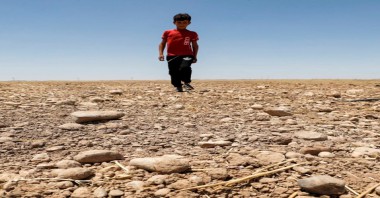
Globalization is also contributing to climate change, which has a disproportionate effect on Africa despite the continent’s limited contribution to the problem. Cyclones Idai and Kenneth, which recently devastated Malawi, Mozambique, and Zimbabwe, are a tragic example of what is to come.
Unsurprisingly, therefore, the economic disparity between Africa and richer countries has widened in recent decades, with the ratio of African incomes to those in advanced economies falling from 12% in the early 1980s to 8% today. In order to reverse this trend and enable Africa to benefit more from globalization, the region’s policymakers should accelerate their efforts in three areas.
























Use the below form to post a comment